Renewables finance
Compare Business
Renewables Finance
What we do
Compare Advantage is a free comparison service. Tell us what you want to install, from rooftop solar to a heat pump, and our partner, FCA-authorised broker Halo Corporate Finance, checks your enquiry against the 130+ lenders on its panel. Spread the cost, and compare it with the installer’s own finance before you sign.
- Solar panels, batteries, heat pumps and EV chargers
- Repayments set against the energy you save
- For owned or leased business premises
Prefer to talk? Call 0330 057 7175
- 130+ lendersOn our partner’s panel
- £5k to £1mLoans and asset finance
- One enquiryInstead of one per lender
- FCA-authorised partnerHalo Corporate Finance
- Free to enquireNo obligation to apply
Compare before you apply
Two decisions, not one
Installing solar or a heat pump means choosing a system and choosing how to pay for it. Installers often present both together, with finance ready to sign alongside the quote. The system may be right while the finance is not the cheapest available, and with renewables the agreement type also decides who gets the tax relief. Separating the two decisions, and comparing the finance on its own, puts you in control of both.
- 1
Tell us once
Two minutes on the form: how much, what it is for and a few details about the business.
- 2
The panel is checked
Halo Corporate Finance matches your enquiry against the 130+ lenders on its panel.
- 3
You choose
Halo talks you through the options that fit. You decide whether to apply. There is no obligation.
What to compare
- The installer’s finance against the panel. Many installers offer finance. Check what the same system costs to fund through other lenders before you sign both at once.
- Repayments against expected savings, using your own energy bills and the installer’s estimate. Treat the estimate as a forecast, not a promise.
- Hire purchase against a lease, which changes who claims the tax relief. For renewables the allowances can be a large part of the case.
- The term against the equipment’s life and its warranties. Finance that ends well before the panels or heat pump wear out leaves years of savings with no repayment.
- What happens if you move, especially on leased premises. Ask whether the agreement can be settled or the equipment moved.
What you can finance
Generate, store and use your own energy
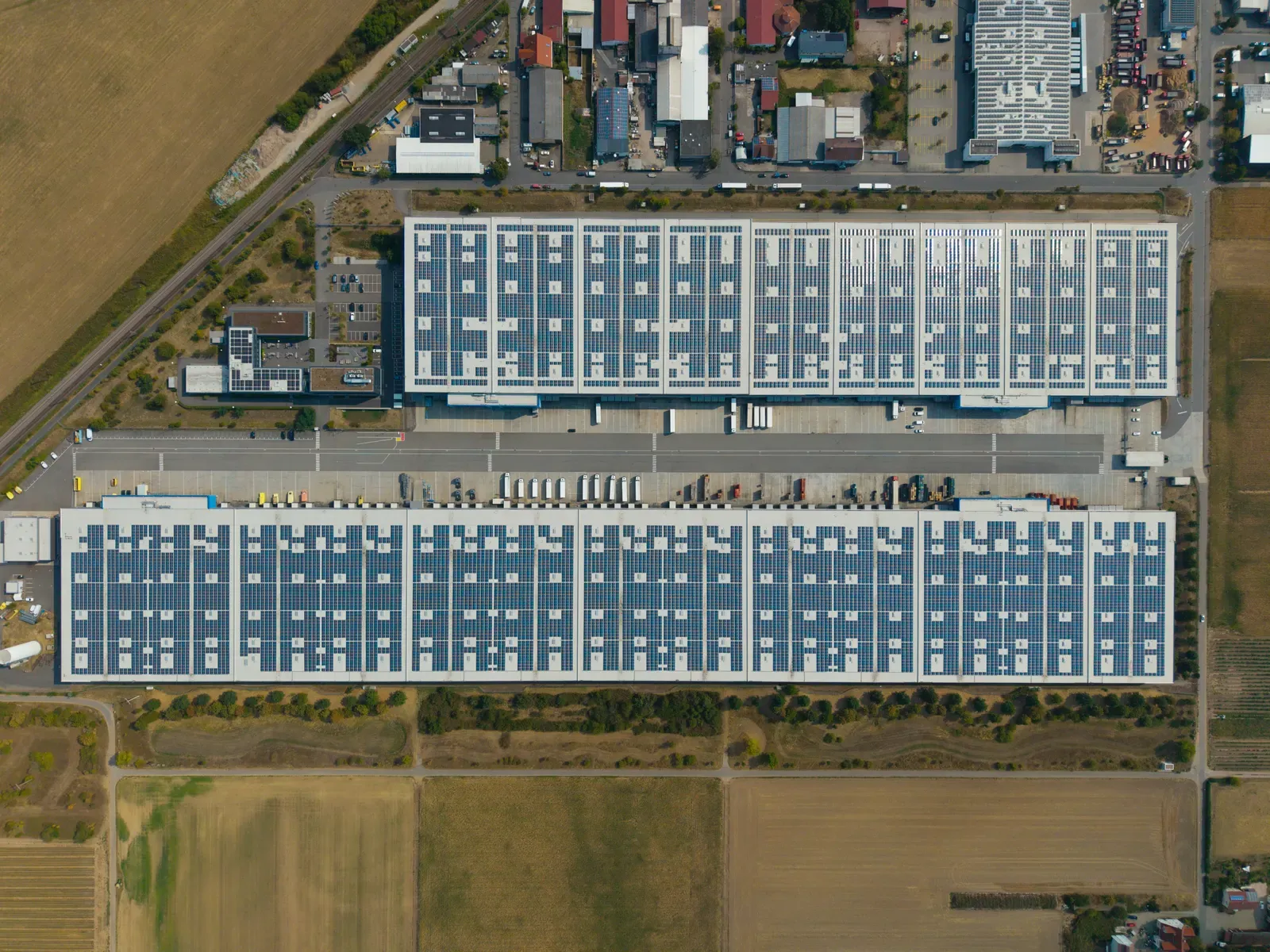
Lenders on the panel fund single systems and combined projects, including installation, for businesses that own or lease their premises.
Solar panels
Rooftop or ground-mounted, on offices, warehouses, farms and factories. Most valuable where electricity is used during the day.
Battery storage
Stores solar power for later, or charges when grid prices are low. Often added to a solar system or fitted at the same time.
Heat pumps
Air or ground source, replacing gas or oil boilers for heating and hot water in offices, shops, surgeries and workshops.
EV chargers
Depot and workplace chargers for vans and company cars, often paired with solar so vehicles charge from your own power.
Efficiency upgrades
LED lighting, controls, voltage optimisation and insulation, where the saving helps cover the payment.
Biomass and other systems
Biomass boilers, combined heat and power and wind, typically for larger or rural sites. Fewer lenders, so comparing matters more.
The idea
Paying for it from the bills it replaces
The case for financing renewables is simple. Instead of paying an energy supplier every month, part of that money goes towards equipment the business will own, or use, for many years.
Whether it works for your business depends on a few things only you can check: how much energy you use, what time of day you use it, what you pay for it now, and how long you will stay at the site. A business that uses most of its power during daylight hours gets more from solar than one that runs mainly at night, unless it adds a battery.
Start with twelve months of energy bills. Ask more than one installer for a proposal based on them. Then compare the finance on the same system, so you are comparing like for like.
Help with the cost
Three schemes worth knowing about
Rules as of November 2026. Check the current position before you commit.
No business rates on the kit
In England, plant and machinery used for onsite renewable generation and storage, such as rooftop solar and batteries, is exempt from business rates from 1 April 2022 to 31 March 2035. Scotland has its own exemption.
Paid for what you export
Under the Smart Export Guarantee, businesses can be paid by an energy supplier for electricity they export to the grid, for installations up to 5MW. Small solar systems up to 50kW usually need MCS certification.
A grant for some heat pumps
The Boiler Upgrade Scheme gives £7,500 towards an air or ground source heat pump for homes and small and medium non-domestic buildings in England and Wales. It runs until 30 December 2029.
Tax and VAT
How renewables are treated for tax
Renewables do not follow quite the same tax rules as most business equipment. If you buy or use hire purchase, these apply. On most leases, the finance company claims the allowances instead.
Solar and heat pumps are special rate
HMRC treats spending on solar panels, and heating systems such as heat pumps, as special rate plant. That shapes which allowances you can use.
Annual Investment Allowance
Deduct the full cost, up to £1 million a year, if you buy or take the system on hire purchase. Available to companies, sole traders and partnerships.
50% first-year allowance
Companies can claim 50% in the first year on new special rate assets. Full expensing at 100% does not apply to special rate spending.
VAT at 20%
The 0% VAT rate on energy-saving materials covers homes and buildings used for charity, not business premises. A VAT-registered business can usually reclaim the VAT instead.
HMRC does not set out a specific treatment for batteries. Your accountant can confirm how your system should be claimed.
Solar in figures
Solar is being installed faster than ever
23.4 GW
of solar capacity installed in the UK by the end of September 2026, provisional figures
296,000
solar installations added in the 12 months to September 2026, a record
2035
the year England’s business rates exemption for onsite renewables and batteries is due to end
Sources: Department for Energy Security and Net Zero, solar photovoltaics deployment (October 2026); Non-Domestic Rating (Plant and Machinery) (England) Regulations 2022.
Before you enquire
What to have ready
- The installer’s quote and system specification
- Twelve months of business energy bills
- Whether you own the premises, or the lease length and landlord’s consent
- Your latest business accounts
- Any grant you are applying for, such as the Boiler Upgrade Scheme
- Any finance offer from the installer, to compare against
For how hire purchase and leasing differ on tax, see our hire purchase vs finance lease guide. For other kit, see equipment finance.
What is renewables finance?
Finance that lets a business install solar panels, batteries, heat pumps or chargers and pay for them over time, usually through hire purchase, a lease or a loan. Many businesses aim for the energy savings to cover most or all of the repayment.
Will the savings pay for the finance?
They can, but it depends on how much energy you use, when you use it, the system size and future energy prices. Ask the installer for an estimate based on your own bills, and treat it as a forecast. We do not quote savings figures.
Can I finance solar panels on a building I lease?
Often, yes, with the landlord’s consent. Lenders will want to know the lease length, and what happens to the system if you leave. Agree it with the landlord before you commit.
Do I pay business rates on solar panels?
In England, onsite renewable generation and battery storage are exempt from business rates from 1 April 2022 to 31 March 2035. Scotland has its own exemption from 1 April 2023. Check your bill with your local council.
What tax relief can I claim on solar panels?
Solar panels are special rate assets. If you buy them or use hire purchase, you can usually claim the Annual Investment Allowance of up to £1 million, and companies can claim a 50% first-year allowance. Full expensing at 100% does not apply. Ask your accountant which suits you.
Is VAT charged on business solar panels?
Yes, at the standard 20% rate. The 0% rate on energy-saving materials only applies to homes and charitable buildings. A VAT-registered business can usually reclaim it.
Can my business get a heat pump grant?
The Boiler Upgrade Scheme gives £7,500 towards an air or ground source heat pump for small and medium non-domestic buildings in England and Wales, until 30 December 2029. Your installer applies for it, and finance can cover the rest.
Can I sell spare electricity back to the grid?
Yes. Under the Smart Export Guarantee, businesses can be paid for electricity they export, for systems up to 5MW. Rates vary by supplier, so compare them like any other tariff.
Can I finance EV chargers with the vans?
Often, yes. Chargers can go on their own agreement or alongside vehicles. See van and fleet finance and business car finance.
Does it matter which installer I use?
Yes, for the work and for the finance. Many lenders and schemes need an accredited installer, such as MCS for smaller solar systems. Get more than one quote and check the warranties.
Sources
- HMRC Capital Allowances Manual: solar panels (CA22335)
- GOV.UK: Annual Investment Allowance
- GOV.UK: Check if you can claim full expensing or 50% first-year allowances
- legislation.gov.uk: Non-Domestic Rating (Plant and Machinery) (England) Regulations 2022
- Ofgem: Smart Export Guarantee
- GOV.UK: Boiler Upgrade Scheme, what you can get
- HMRC VAT Notice 708/6: energy-saving materials and heating equipment
- DESNZ: Solar photovoltaics deployment (October 2026)
- FCA register: Halo Corporate Finance Ltd (FRN 726655)
Written by the Compare Advantage team, Chorley. Facts checked against the sources above on 4 November 2026. This page is general information, not financial advice.
Compare Advantage Ltd (FRN 1028452, company no. 14289362) is an Introducer Appointed Representative of Halo Corporate Finance Ltd (FRN 726655). We introduce business finance enquiries to Halo. We are not a lender and do not give financial advice. If you take out finance, the lender may pay commission to Halo Corporate Finance, and Halo may pay us a fee for the introduction. Finance is subject to status and is available to UK businesses only.